Getting Oriented in Portland
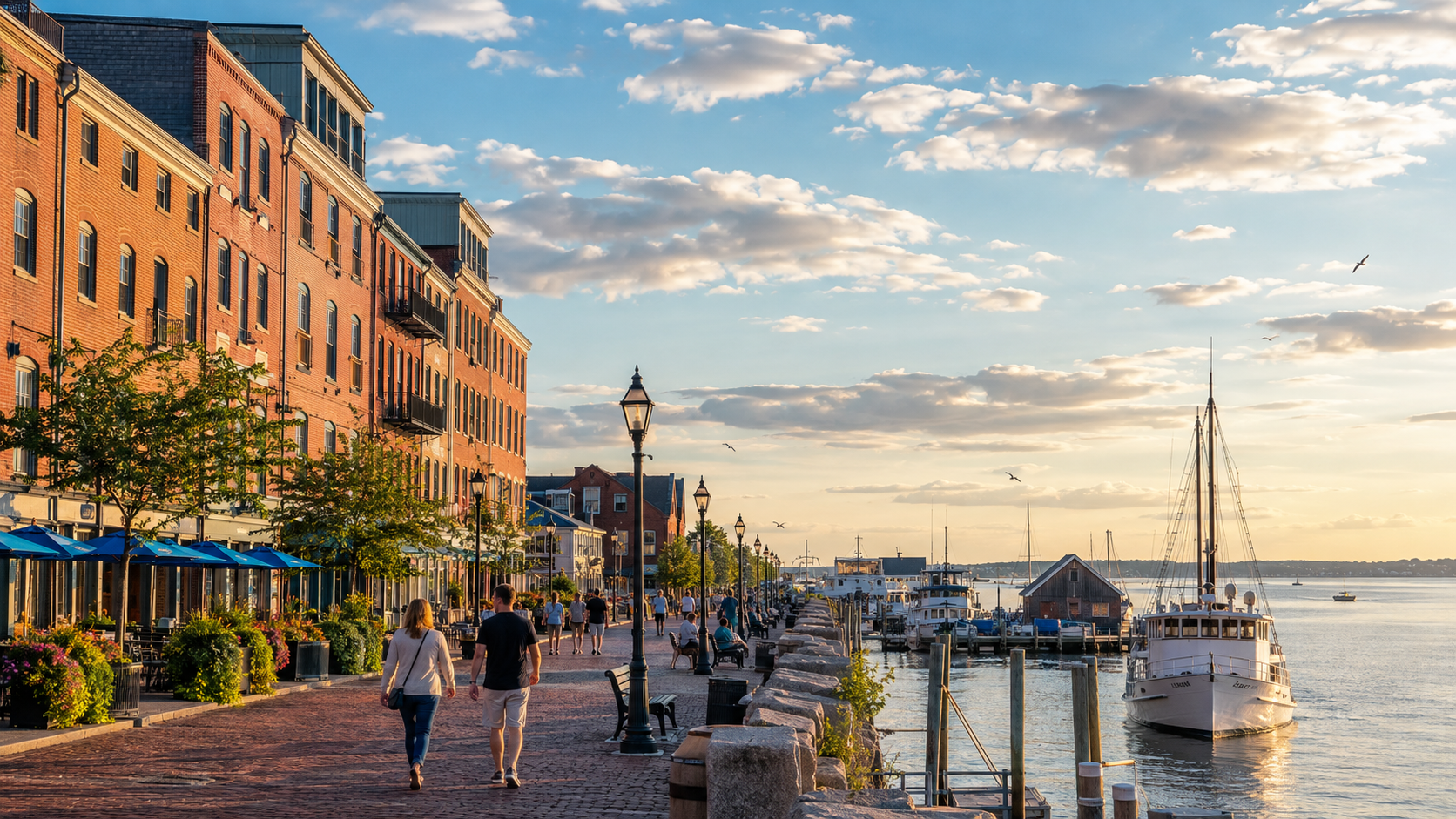
Portland sits on Casco Bay in southern Maine.
The peninsula contains Downtown, the Old Port, West End, East End, Bayside, and several dense residential areas. Beyond the peninsula, neighborhoods spread toward Back Cove, Deering, North Deering, Riverton, and Stroudwater.
The city officially recognizes neighborhood organizations including Back Cove, Deering Center, Munjoy Hill, North Deering, Parkside, Stroudwater, West End, and Woodfords-Oakdale.
Where I Would Start a Home Search
For historic architecture and walkability, explore the West End.
If water views and Eastern Promenade access appeal to you, look around Munjoy Hill and the East End.
Deering Center provides a more residential feel with local businesses and established streets.
Meanwhile, North Deering, Nason’s Corner, and Stroudwater can provide more space and easier car-oriented living.
I would compare at least three of these areas before deciding because Portland changes quickly from one neighborhood to another.
Looking Beyond Portland
Portland’s surrounding communities should be part of the same search.
South Portland gives you beaches, residential neighborhoods, shopping, and easy city access.
Westbrook has a growing downtown and often provides another housing price point.
Falmouth sits north of Portland with suburban and coastal surroundings. Meanwhile, Scarborough provides substantial residential development south of the city.
For many buyers, I would compare Portland with South Portland, Westbrook, Falmouth, and Scarborough.
What the Housing Looks Like
Portland offers historic houses, triple-deckers, condos, apartments, townhomes, multifamily buildings, and detached homes.
Housing on the peninsula often trades yard space and parking for walkability.
Outer neighborhoods generally provide more conventional residential lots.
Before purchasing an older home, check insulation, roof condition, heating systems, windows, foundation moisture, sewer lines, and electrical updates.
Research the Exact Property
Portland maintains zoning maps, GIS tools, and flood information through its Planning and Urban Development resources.
That matters especially when evaluating a historic neighborhood, waterfront area, or property near redevelopment.
Before assuming a neighboring lot will remain unchanged, check its zoning and current development status.
Property Costs
Portland housing should be budgeted beyond the purchase price.
Heating is particularly important in Maine. Older homes may use oil, natural gas, electricity, heat pumps, or combinations of systems.
Also consider property taxes, insurance, snow removal, parking, maintenance, and condominium fees.
For older buildings, ask for actual winter utility bills when possible.
Working in Portland
Major employment includes healthcare, hospitality, professional services, education, government, marine industries, retail, and technology.
Many residents also work in South Portland, Scarborough, Westbrook, or other nearby communities.
Therefore, workplace location should influence which side of Portland you choose.
Getting Around Portland
Greater Portland Metro operates local and regional bus routes.
Current routes connect Portland with Westbrook, South Portland, the Maine Mall area, and additional surrounding communities.
The system also introduced fare changes in August 2026.
If transit matters, check the route from the exact address.
Airport Access
Portland International Jetport sits close to the city, making airport access unusually convenient for a metro of this size.
Residents in Stroudwater, Libbytown, and South Portland can be especially close.
However, aircraft noise can matter for selected properties, so visit the neighborhood before buying.
Maine Winters
Portland winters bring snow, ice, freezing temperatures, wind, and coastal storms.
A driveway, steep hill, or limited parking situation can become much more important after the first major snowfall.
When touring a property, ask where snow is stored and who handles sidewalks.
Also inspect heating systems, insulation, roof condition, and basement moisture.
Coastal Flooding
Portland provides official FEMA flood maps and emergency-management resources.
Coastal areas, low-lying streets, and properties near waterways deserve extra research.
Ask about storm surge, previous basement water, flood insurance, drainage, and sump systems.
Portland Schools
Portland Public Schools serves city residents.
Because neighborhoods and schools are closely tied to location, families should verify the assigned school for the exact home.
Also compare transportation, childcare, after-school programs, and walking conditions.
Healthcare
Portland is southern Maine’s major healthcare center.
That provides access to hospitals, specialists, urgent care, pediatric services, and primary-care practices.
For households managing regular medical needs, proximity to Portland’s healthcare corridors can be a meaningful housing factor.
Moving With Pets
Portland can work well for pet owners, especially near neighborhood parks and walking routes.
However, apartment and condominium rules can be restrictive.
Confirm breed, weight, and pet-count limitations before applying.
Also locate an emergency veterinarian before moving day.
Parks and Outdoor Life
The Eastern Promenade, Back Cove, neighborhood parks, beaches, and regional trail systems give Portland strong outdoor access.
For runners, walkers, dog owners, and cyclists, living near these areas can materially improve everyday life.
Building a New Community
Portland’s neighborhood organizations provide a useful starting point for newcomers.
Deering Center, Munjoy Hill, Back Cove, North Deering, and other neighborhoods maintain local organizations focused on community issues and events.
That can make a small coastal city feel even more connected.
Your First Week in Portland
Set up utilities, parking arrangements, school registration, and healthcare records first.
Then locate groceries, pharmacies, veterinary care, snow-route information, and your preferred commute.
Finally, spend time outside the Old Port.
That is where you will start understanding Portland as a place to live rather than simply visit.
Final Thoughts
Portland Maine combines coastal character, employment, healthcare, walkable neighborhoods, and outdoor recreation.
Most importantly, compare housing costs, winter practicality, parking, school assignment, flood exposure, pets, and nearby communities before choosing.
A West End condo, Deering Center house, and South Portland home can create three very different versions of life in Greater Portland.