Getting Oriented in South Portland
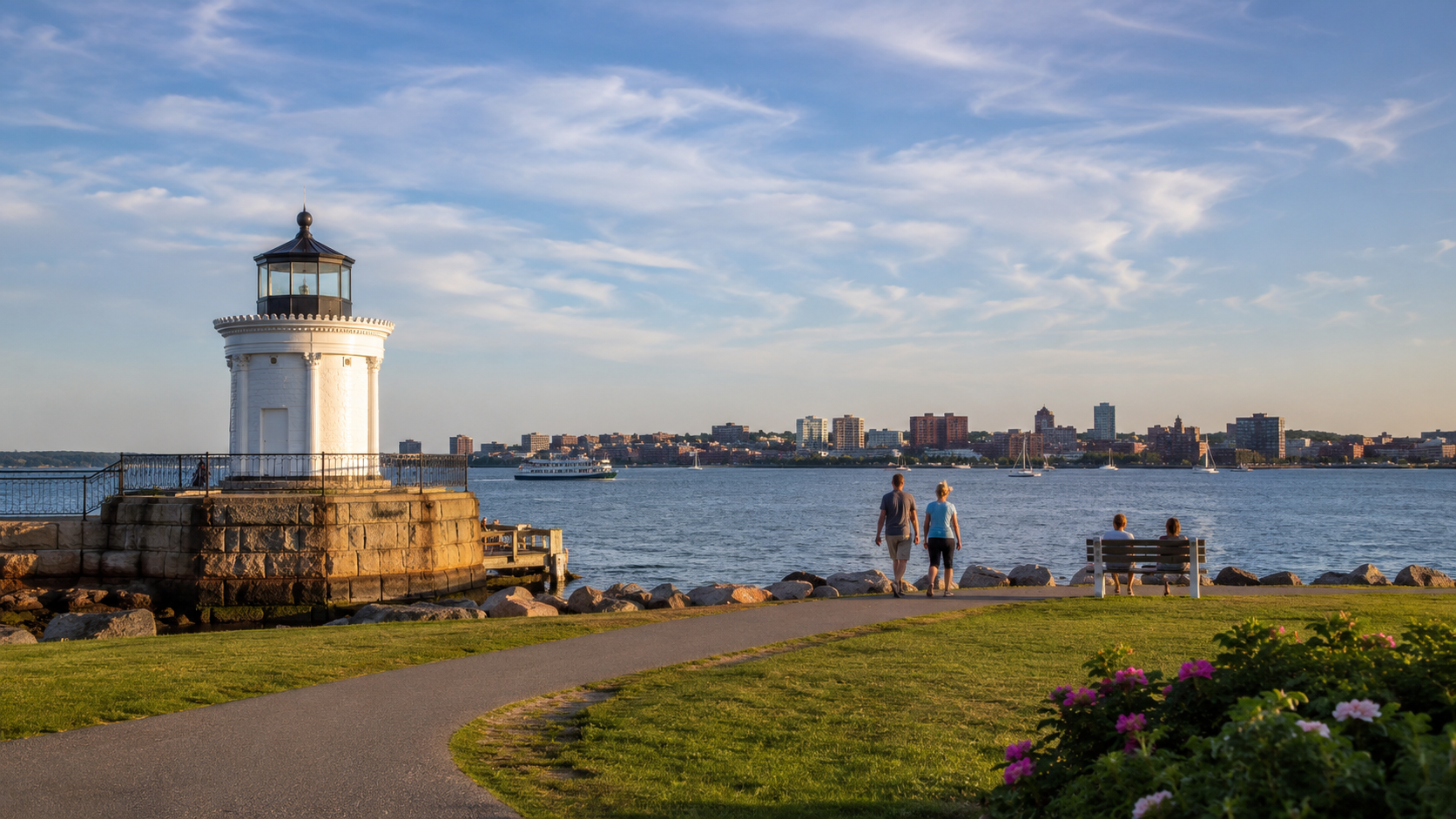
South Portland sits across the Fore River from Portland.
The city includes waterfront neighborhoods, established residential streets, commercial areas around the Maine Mall, and communities stretching toward Cape Elizabeth and Scarborough.
Interstate 295 and Route 1 are important regional connections.
Where I Would Start a Home Search
Willard appeals to buyers wanting neighborhood streets close to Willard Beach.
Meetinghouse Hill provides another established residential area with convenient access to local services.
Knightville sits near the Casco Bay Bridge and offers restaurants, shops, and quick Portland access.
Meanwhile, areas near Mill Creek provide everyday shopping and services.
Farther west, neighborhoods near the Maine Mall offer a much more car-oriented suburban environment.
Looking Beyond South Portland
Portland is the obvious comparison directly across the bridge.
However, Cape Elizabeth provides quieter coastal neighborhoods immediately south.
Scarborough offers larger suburban development and extensive commercial services.
Meanwhile, Westbrook can provide another housing option for households prioritizing inland commuting.
Housing
South Portland offers capes, ranch homes, older cottages, apartments, condos, multifamily properties, and newer construction.
Near the coast, buyers should pay close attention to moisture, wind exposure, exterior maintenance, and insurance.
Older homes also deserve checks for insulation, heating systems, windows, foundations, and electrical updates.
Commuting
The Casco Bay Bridge connects South Portland directly with Portland.
That makes neighborhoods near Knightville especially convenient for Portland commuters.
However, bridge traffic and construction can affect timing.
Greater Portland Metro Route 3 connects Portland, Westbrook, and South Portland, while Route 5 serves the Maine Mall.
Airport Access
South Portland is extremely convenient to Portland International Jetport.
For households with frequent air travel, this can be a significant advantage.
However, certain areas may experience more aircraft activity, so visit a potential neighborhood at different times.
Coastal Weather and Flooding
South Portland’s coastal setting means wind, salt exposure, snow, ice, and coastal flooding deserve attention.
Buyers near low-lying or waterfront areas should check FEMA mapping and insurance requirements.
Portland-area emergency resources also emphasize flood and coastal-storm preparedness.
Schools and Families
South Portland operates its own school system rather than Portland Public Schools.
Therefore, moving across the bridge changes the district completely.
Families should verify the assigned school, transportation, childcare, and after-school routine before buying.
Moving With Pets
Willard Beach-area neighborhoods and residential streets can make dog walking convenient.
However, beach access rules can vary seasonally.
Therefore, check current regulations along with rental or HOA pet restrictions.
Everyday Life
South Portland residents have easy access to local restaurants, Mill Creek businesses, the Maine Mall, beaches, Portland employment, and regional healthcare.
That combination is what makes the city practical for many relocating households.
Your First Week in South Portland
Set up utilities, confirm schools, and learn your bridge routes.
Then identify your grocery store, veterinarian, pharmacy, beach access, and winter parking requirements.
Finally, drive through Willard, Meetinghouse Hill, Knightville, Cape Elizabeth, and Scarborough.
That will quickly show whether South Portland is the right side of the metro for you.
Final Thoughts
South Portland Maine offers a useful balance between Portland access and a more residential coastal environment.
Most importantly, compare neighborhood location, bridge commuting, coastal exposure, schools, housing condition, pets, and nearby communities.